



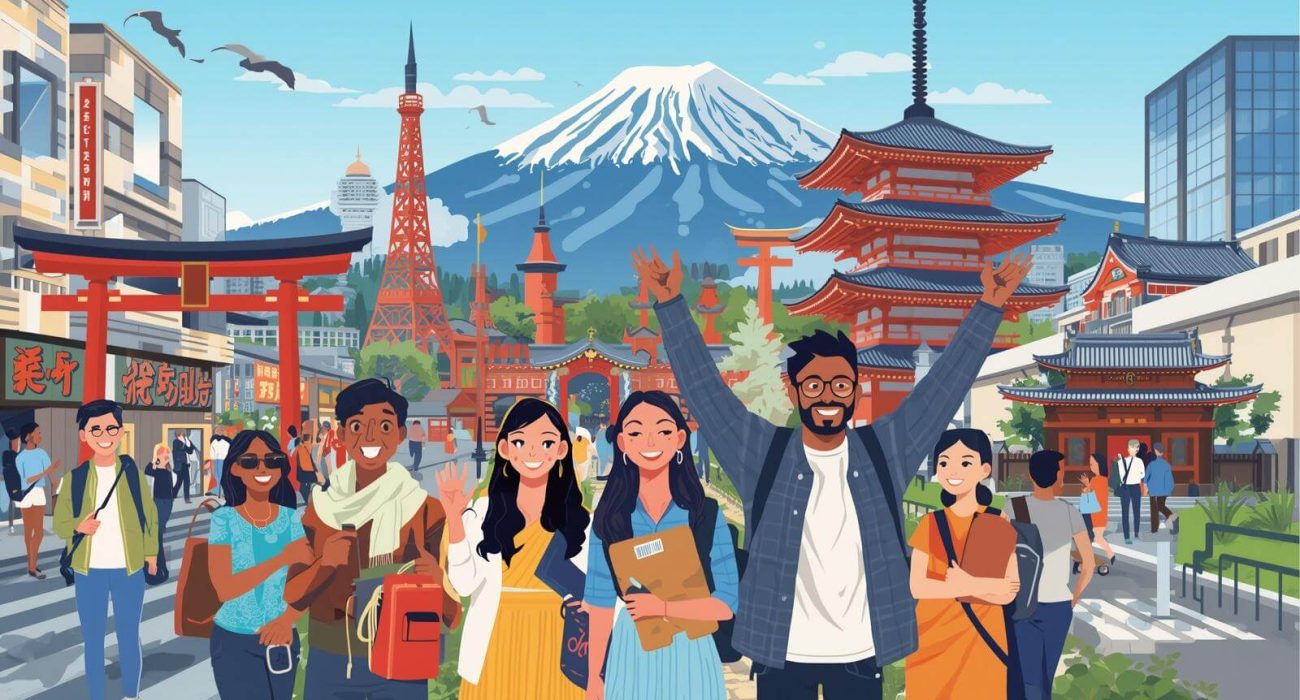
You open Instagram, and someone is eating ramen in Tokyo. You scroll further, and another friend is posing in a hanbok at Gyeongbokgung Palace. You check your WhatsApp, and your cousin is asking for Seoul restaurant recommendations. Everyone seems to be going east this year.
Is it just you, or is something actually happening?
It is not just you. Something is happening. Something big.
In 2025, Japan welcomed over 3.15 lakh Indian visitors – the first time Indians crossed the 3‑lakh mark, a staggering 35.2% jump from the previous year. South Korea recorded nearly 2 lakh Indian arrivals in 2025, a 13% increase. And 2026 is shaping up to be even bigger.
So why are Indians suddenly falling in love with Japan and South Korea? Let me break it down for you. Read this till the end. It won’t take much of your time, but by the time you are done, you will understand exactly why your travel plans should include these two incredible countries.
Reason 1: The Hallyu Wave and Anime Effect Are Real
You cannot talk about Korea without mentioning the Korean Wave. K‑pop groups like BTS and Blackpink, K‑dramas like Squid Game, and Korean beauty and cuisine have created a cultural phenomenon in India. The Korean Wave has woven itself into the daily lives of millions of Indian youngsters – from the language apps on their phones to the instant ramen on supermarket shelves.
And in 2026? BTS came back from their military hiatus with a world tour, sending K‑pop tourism into overdrive. South Korea welcomed 2.06 million foreign visitors in March 2026 alone, with tourism spending supercharged by the BTS comeback tour. Travel companies are now selling BTS‑themed holiday packages, and Korea aims to welcome 2.7 lakh Indian visitors in 2026 – driven directly by this cultural pull.
Japan, on the other hand, has its own cultural magnetism. Anime fans are flocking to attractions like the Naruto & Boruto theme park, while culinary explorers are chasing authentic sushi, ramen, and street food. Indian travellers want stories, not just stamps – and Japan delivers that across seasons.
Reason 2: The ‘Sakura Shift’ and Experience‑Led Travel
Spring is the season of cherry blossoms. And Indians have caught on.
Japan tops the list for spring travel, followed closely by South Korea. Searches for “cherry blossom” and “sakura” have surged, reflecting a growing desire for time‑sensitive, immersive experiences.
What is changing is that Indians are moving beyond checklist tourism. Young couples, families, and first‑time international travellers now account for 55‑60% of bookings to Japan. Travellers are branching out beyond Tokyo and Seoul to lesser‑explored regions like Fukuoka, Hiroshima, and Gyeongju. Japan has emerged as a year‑round destination – demand is shifting from cherry‑blossom‑only trips to regional, wellness, and cultural journeys.
One travel platform even reported over 90% growth in searches for Tokyo and 85% for Osaka. Indians are packing their bags, and they are going east.
Related: Korea & Japan in 10 Days: A Realistic Itinerary for Indian Travelers
Reason 3: Visa Policies Just Got Friendlier
Here is where planning becomes easier.
For Japan: The eVisa system launched for Indians in 2024 continues smoothly into 2026. There is a procedural change – from March 2026, visa applicants in Chennai, Hyderabad, Kochi, Puducherry, and Bengaluru must book an appointment. Walk‑ins are no longer accepted there. Other cities can still walk in. Plan ahead, and the process is straightforward.
For South Korea: Here is excellent news. Korea has extended its group visa fee waiver for Indian travellers until 30 June 2027. Group travellers visiting through authorised agencies can save up to ₹1,155 (KRW 18,000) per person – the standard single‑entry visa fee. Solo travellers still pay the standard fee, but for families and friend groups, this is a meaningful saving.
Reason 4: Direct Flights Are Multiplying
Remember when getting to East Asia meant long layovers? Those days are fading.
Air India launched direct flights from Mumbai to Tokyo Haneda starting June 2026, operating four times per week on a Boeing 787‑8 Dreamliner. This is in addition to its existing Delhi‑Tokyo services. Japan Airlines also started Tokyo‑Delhi direct flights.
Better connectivity means shorter travel times, lower fares, and more flexibility. Indian travellers now have genuine options to build multi‑city itineraries across both countries – and many are.
Reason 5: The Rupee Holds Its Own
Let us talk money. The Japanese Yen is around ₹0.58, and the South Korean Won is around ₹0.062. Not the strongest exchange rates ever, but compared to Europe or the US, East Asia offers significantly better value for money – especially for accommodation, transport, and daily meals.
One source noted that over 44% of travel budgets for Japan and Korea are allocated to flights and accommodation, leaving less room for discretionary shopping. But that is exactly the point. Even with tighter budgets, travellers can still enjoy world‑class experiences without breaking the bank. For middle‑class Indian families, that is a winning equation.
Reason 6: Safety, Cleanliness, and ‘Soft Landing’ International Travel
Here is something travellers rarely say about Europe or America, but often say about Japan and Korea: “I felt safe everywhere.”
Both countries rank among the safest destinations globally. Low crime rates, impeccable public transport, English signage in tourist zones, and a culture of hospitality make them ideal for first‑time international travellers, families, and solo female travellers.
For many Indians, Japan and Korea serve as the perfect “soft landing” into international travel – close enough to India (6‑8 hour flights), different enough to feel exciting, but organised enough to feel reassuring.
Related: Why South America Is the Next Big Travel Destination for Indians
The Bigger Picture: A ‘Look East’ Shift
Geopolitics is also playing a role. Ongoing tensions in the Middle East and Europe have pushed Indian travellers to look eastward for their summer getaways.
The numbers speak for themselves. Cox & Kings recorded nearly a 30% rise in summer departures for April–September 2026. Airbnb data shows triple‑digit interest spikes in Japan and South Korea, with Gen Z leading the shift toward Asian destinations.
The travel industry has noticed. Korea Tourism Organization hosted roadshows in Delhi and Mumbai in March 2026, introducing new programmes to help travel partners curate high‑quality experiences. They are investing in India because they see the momentum.
Final Words
Japan and South Korea offer something that Western destinations often miss – a perfect balance of ancient tradition and hyper‑modern efficiency. You can visit a thousand‑year‑old temple in Kyoto in the morning and dance in a Seoul nightclub by evening. You can eat street food that costs less than a movie ticket and stay in luxury hotels that rival anything in Paris.
Add easier visas, new flights, and cultural obsession, and you have a recipe for a travel boom.
So if you have been wondering where to go for your next holiday, look east. Japan and South Korea are waiting – and millions of Indians have already figured out why.
1 Comment